





Skip to content

Cart

Your cart is empty

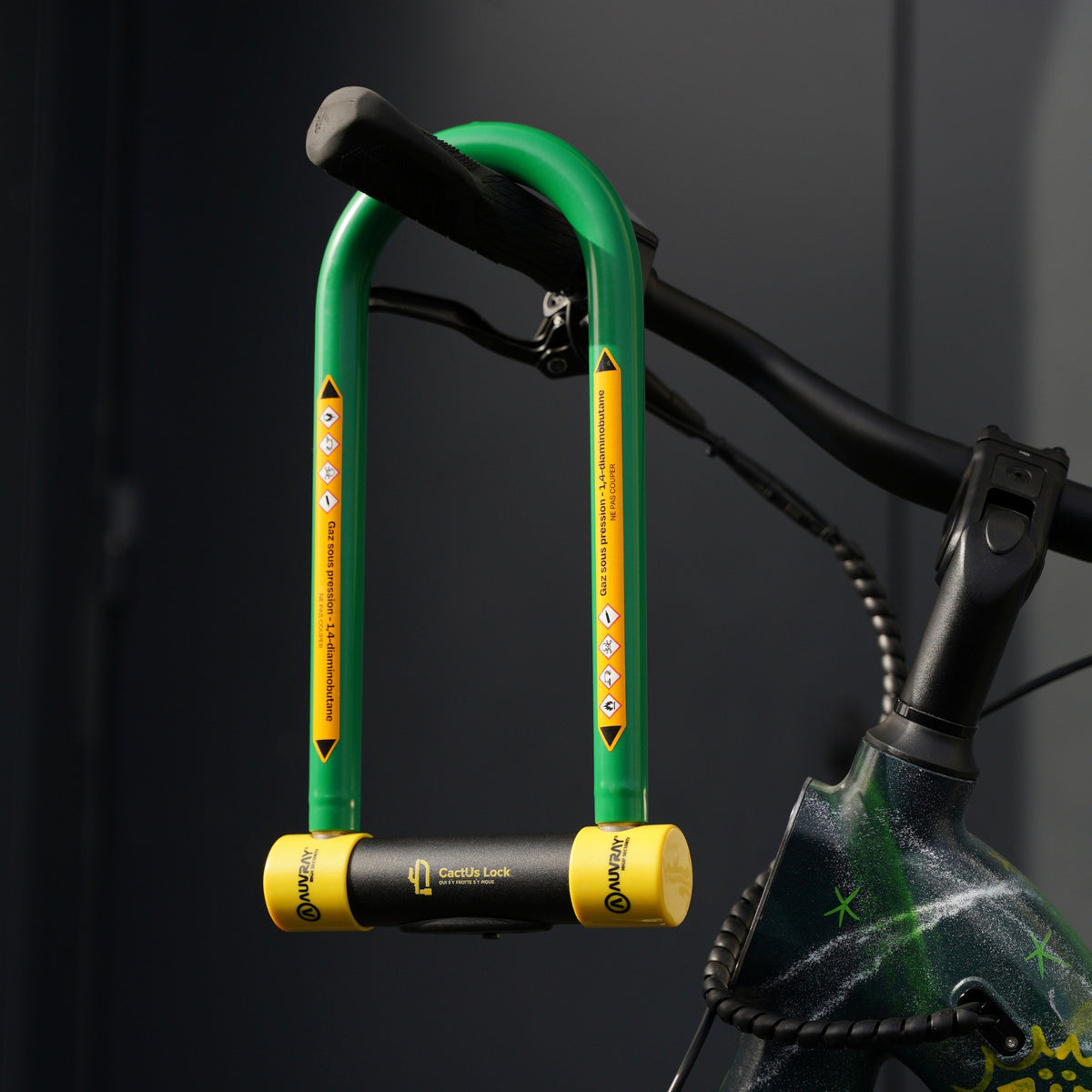
Cactus Lock — The U-lock with an olfactory repellent

Sale price€259,00

Partner product we love:

A bike theft takes 35 seconds on average. One angle grinder, one motion, and it's over.

In case of a cutting attempt, a putrescine-based repellent is released from the first third of the cut: the smell of decomposing cadavers. Immediate biological reflex: recoil, withdrawal, abandonment.

The substance clings to clothes, body hair, and head hair, and its smell persists for several hours.

SRA & FUB 2 Roues certified – Compatible with insurance policies.


Cactus Lock — The U-lock with an olfactory repellent
Cactus Lock — The U-lock with an olfactory repellent Sale price€259,00

Free Delivery from 80€

Money-back guarantee, until January 15!

2 years warranty

3x Interest-Free Payments

Vidéo principale
Unboxing
Unboxing
Facility
Facility

What customers are saying:

Gérard

Gérard

5.0
I was afraid it would just be about the smell. In reality, the device is very robust and the system is well secured. There's no risk of accidental triggering, and that really inspires confidence when you use it.
Thomas

Thomas

5.0
I saw a trigger go off from afar in a bike parking area. Even from a distance, people's reactions were immediate: everyone instinctively moved away; it's really off-putting. And given the size and sturdiness of the lock, it's quickly clear that it's no gadget.

4.7/5 - CactusLock reviews

APPROVED - CACTUS ANTI-THEFT DEVICE

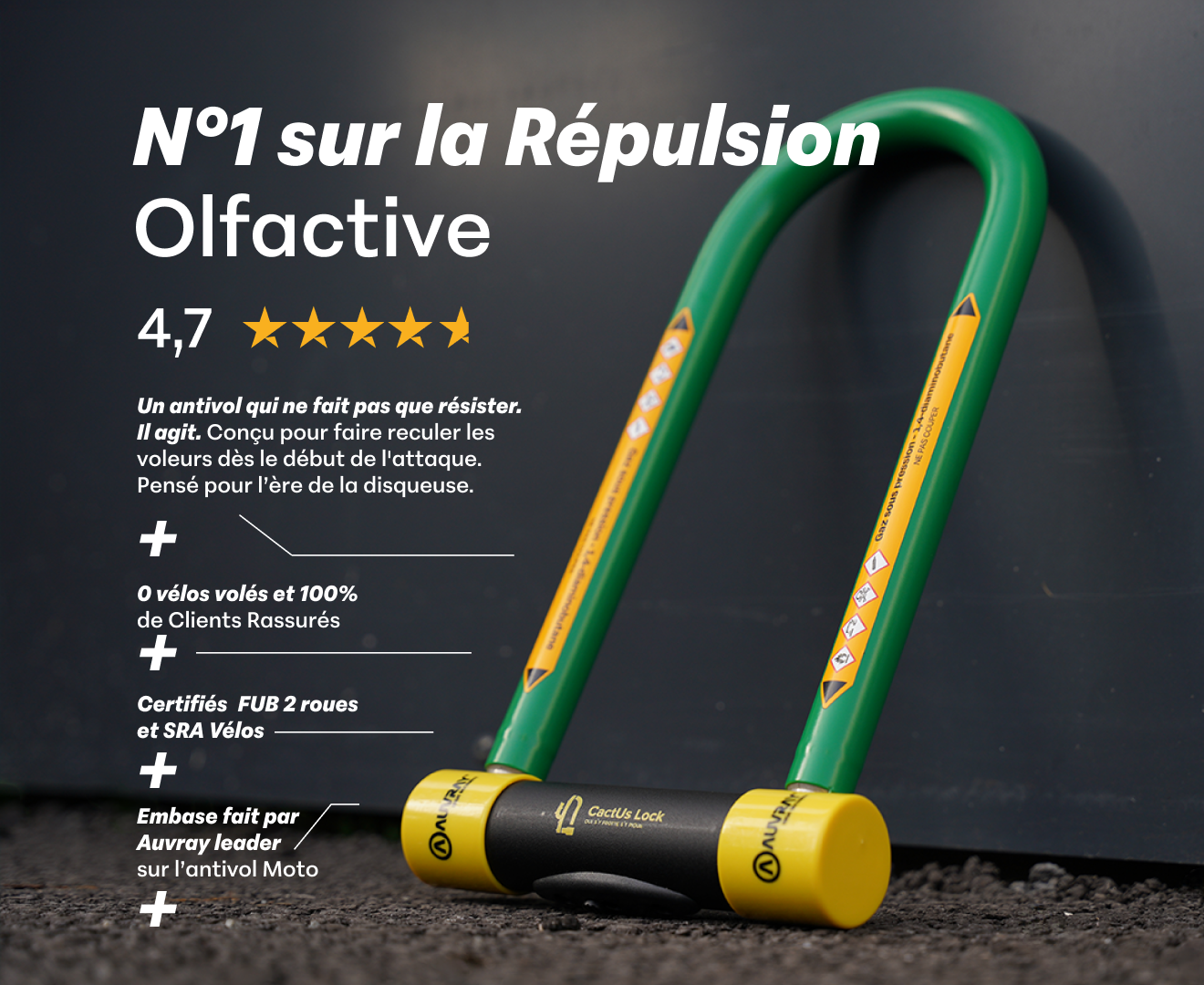
The first anti-theft device that acts. Not just resists

  • 4x more protective barriers
  • Slows down the attack in the first few seconds
  • Releases a repellent gas → Retreat. Withdrawal. Abandon
  • SRA and FUB certified 🇫🇷 Made in France, in Valence (26)

A BIKE LOCK CAN RESIST, A THIEF CAN PERSIST

500,000

BICYCLES STOLEN / YEAR IN FRANCE

84%

ATTEMPTS LEAD TO THEFT

35 sec

CYCLISTS STOP AFTER A THEFT

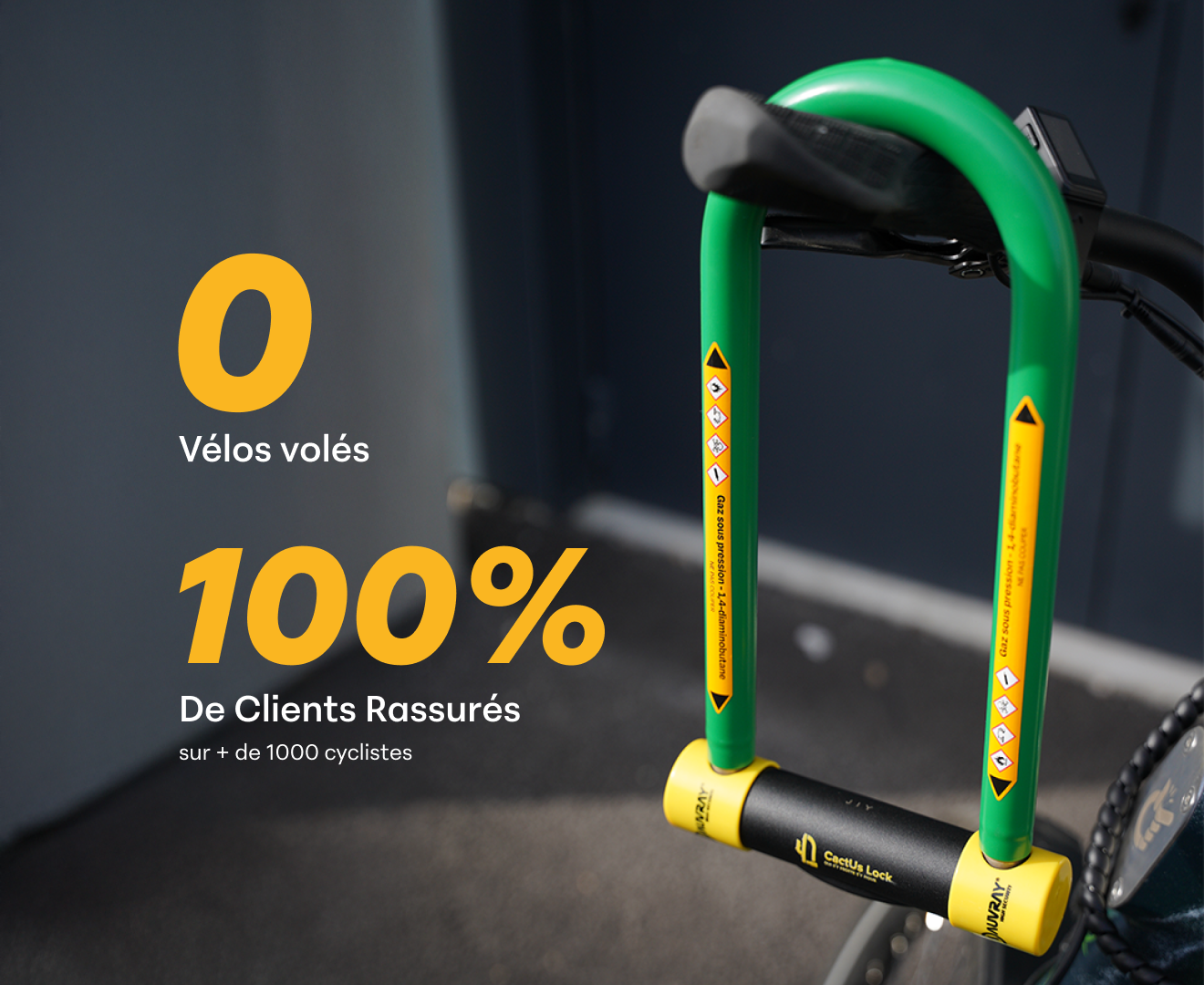
+1,000

BIKES IN CIRCULATION · 0 BIKES STOLEN

Why choose Cactus Lock?

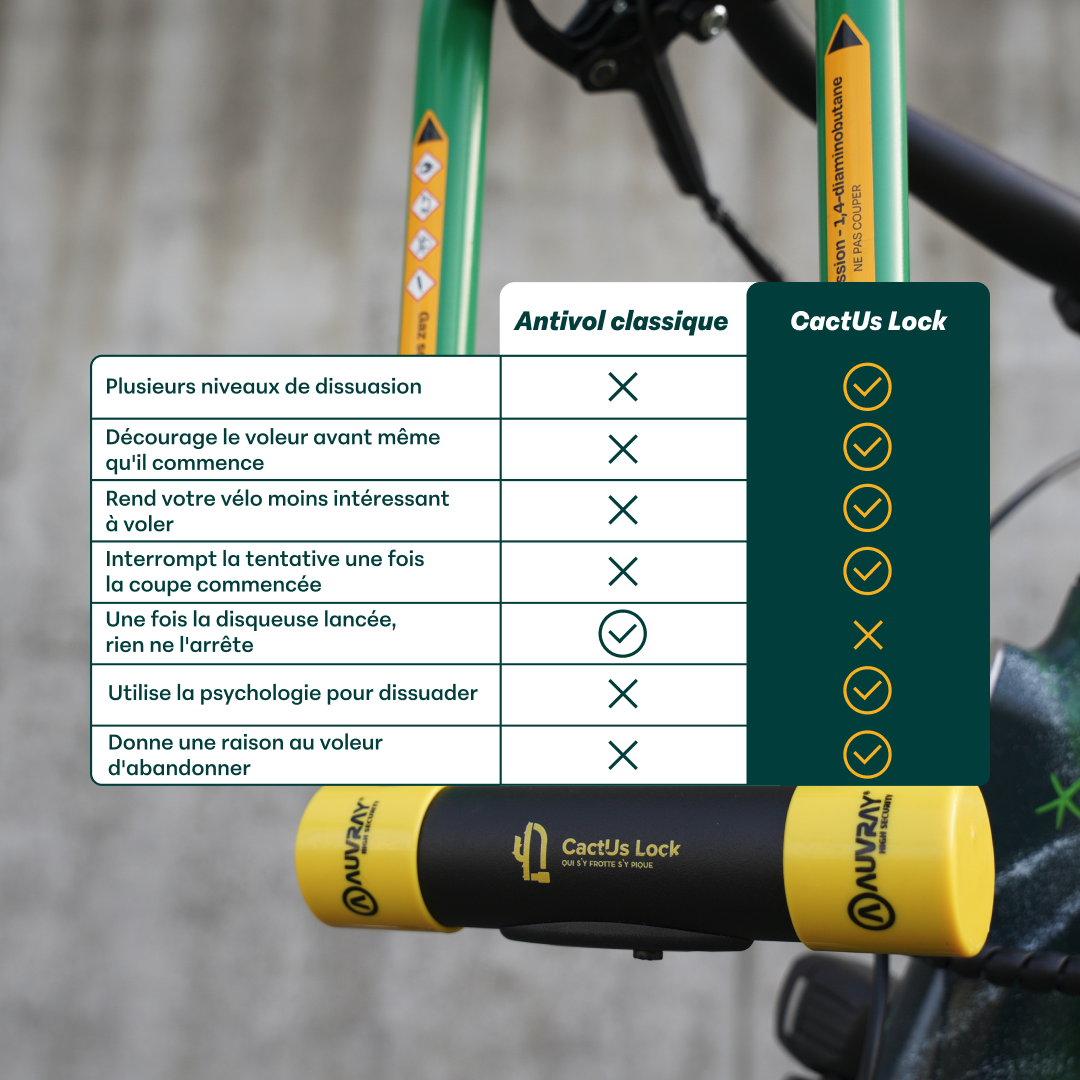
Compare security that undergoes an attack to security designed to control it, at a glance.

Others CACTUS LOCK
Multiple levels of deterrence
Makes your bike less attractive to thieves
Deter the thief before they even start
Interrupts the attempt once the cut has started
Give the thief a reason to give up
Once the angle grinder starts, nothing stops it

Cactus Lock FAQ

Because a good product doesn't shy away from the real questions

A thief acts quickly, under pressure, and chooses the easiest target. Will they equip themselves with a suitable mask, check for airtightness, etc.? Maybe. But will they take that risk when another bike of similar value, discreet, with no visible message, is parked 3 meters away?

CactUs Lock operates on a simple principle, comparable to a metal pipe.

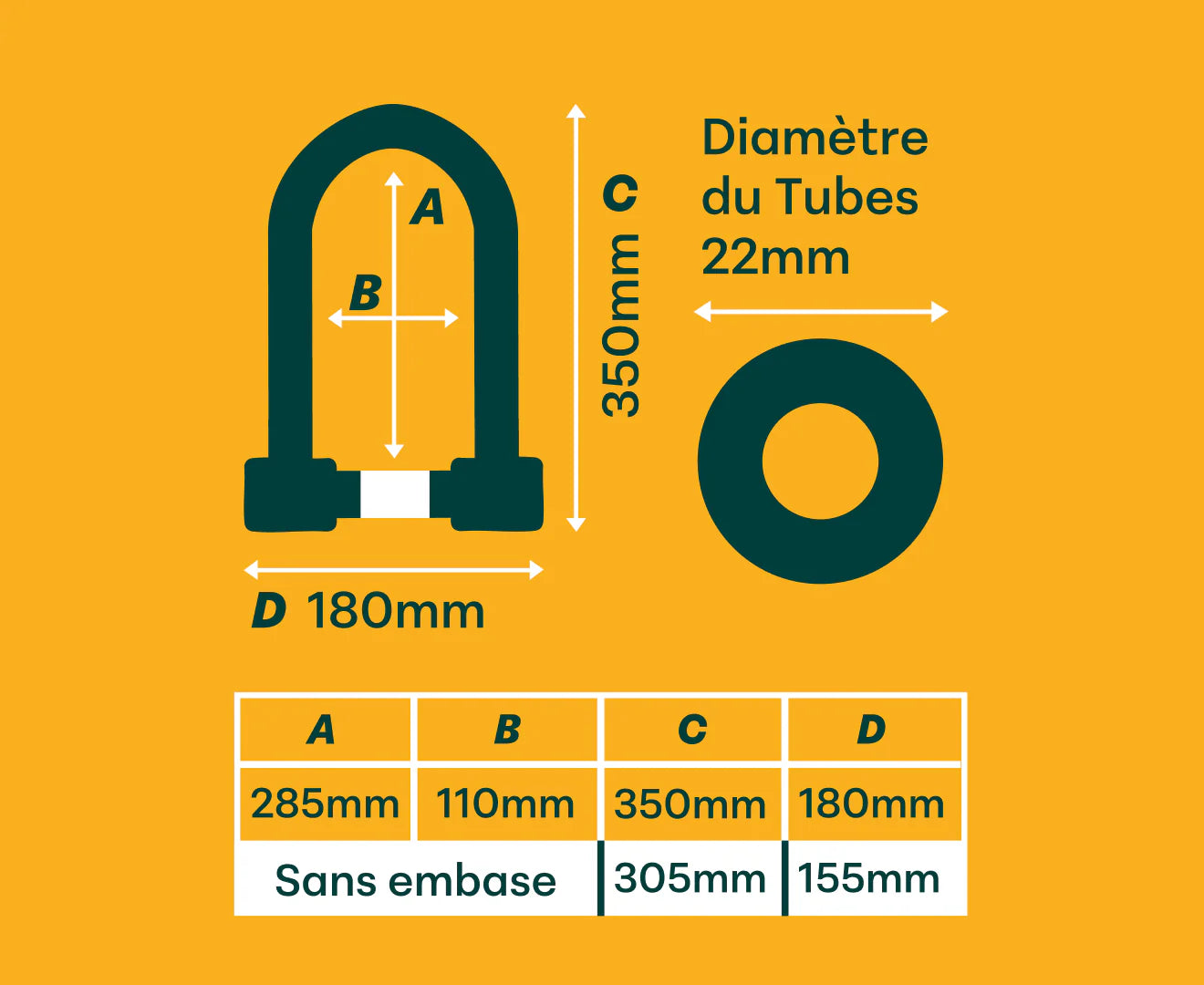
The shackle of the lock is composed of a thick, reinforced steel structure, with a hollow channel running through its entire length at the center.

Inside this channel is a pressurized gas containing a molecule associated with putrefaction: putrescine.

As long as the lock is not attacked, the gas remains completely confined inside.

However, if someone tries to cut the lock with an angle grinder, the cut eventually reaches this channel. At that moment, the gas is released under pressure: 1/3 of the metal section has been cut.

The extremely repulsive odor that is released makes the attack very difficult to continue, which prompts the thief to abandon it.

And even in this case, one point is often forgotten: hair, body hair. The molecule clings to them. The odor remains for several hours, sometimes several days. A thief wants to leave quickly and cleanly. Not marked, with an odor that will follow them.

Theft is an opportunistic decision.
CactUs does not aim to defeat a commando. It aims to ensure that your bike is not chosen.

The odor is released only during an attempted cut.

When a tool like an angle grinder attacks the anti-theft device, it must first cut through a significant thickness of metal.

Once approximately one-third of the material has been cut into, the cut reaches the internal channel, and the gas is released under pressure.

This creates a very intense olfactory cloud within a radius of approximately 2 to 3 meters around the anti-theft device.

At this stage, the attack becomes extremely difficult to continue, especially since two-thirds of the anti-theft device still need to be cut to free the bicycle or motorcycle.

Good question. But what really happens during a theft?
A thief acts quickly, under pressure, and chooses the easiest target. Will he equip himself with a suitable mask, check its airtightness, anticipate a system he doesn't know? Maybe. But will he take that risk when another item of similar value, discreet, with no visible message, is attached 3 meters away?

Next, let's talk technicalities. Putrescine is a very small and volatile molecule. It easily passes through many textiles and conventional protections. A simple surgical mask, a neck gaiter, or even an FFP2 are not enough to completely isolate it. The only truly effective equipment would be a gas mask with a suitable filter. And then we're no longer talking about an opportunistic theft. We're talking about a premeditated theft, with heavy, visible equipment, assimilated to military equipment on public roads.

And even in that case, one point is often forgotten: hair, body hair. The molecule attaches to it. The smell lingers for several hours, sometimes several days. A thief wants to leave quickly and cleanly. Not marked, with a smell that will follow him.

3 keys supplied, numbered key, reproduction possible.

No.

Shocks, vibrations, normal handling, or even an accidental fall will not trigger anything.

The system is designed to react only to a cutting attempt, when the material of the anti-theft device is actually breached.

As long as the anti-theft device is not attacked, the gas remains perfectly confined inside.

This reaction is very human. We associate an odor with a simple discomfort, with something secondary. As if only force mattered. As if only mechanical resistance held sway. Yet, our brain doesn't work that way.

Disgust is one of the oldest defense systems of the human species. Long before laws, insurance, or hardened steel anti-theft devices. Studies published by the Hygiene Centre (London School of Hygiene and Tropical Medicine) describe disgust as an adaptive protection mechanism against illness. It instinctively distances us from what threatens our biological integrity: putrefaction, contamination, decomposition. It is neither moral nor cultural. It is physiological.

Putrescine is precisely a molecule associated with tissue decomposition. In 2015, a study published in Frontiers in Psychology (Wisman & Shrira) showed that exposure to putrescine triggers automatic avoidance and flight behaviors. Participants moved away faster, left the premises, even when they didn't consciously identify the smell.

Why? Because olfaction is directly connected to the limbic system, the center of our survival mechanisms. It bypasses rationalization. We don't think. We react.

Conversely, theft is an opportunistic act. It relies on a simple balance: minimal effort, controlled risk, emotional neutrality. Introducing a stimulus that activates an archaic avoidance mechanism changes this balance. It's not "just a smell." It's the body saying no, acting even before the brain thinks, responding automatically, despite our will.

Security is not just a matter of steel. It's a matter of human behavior. And sometimes, the most powerful deterrent is not one that blocks, but one that acts actively.